

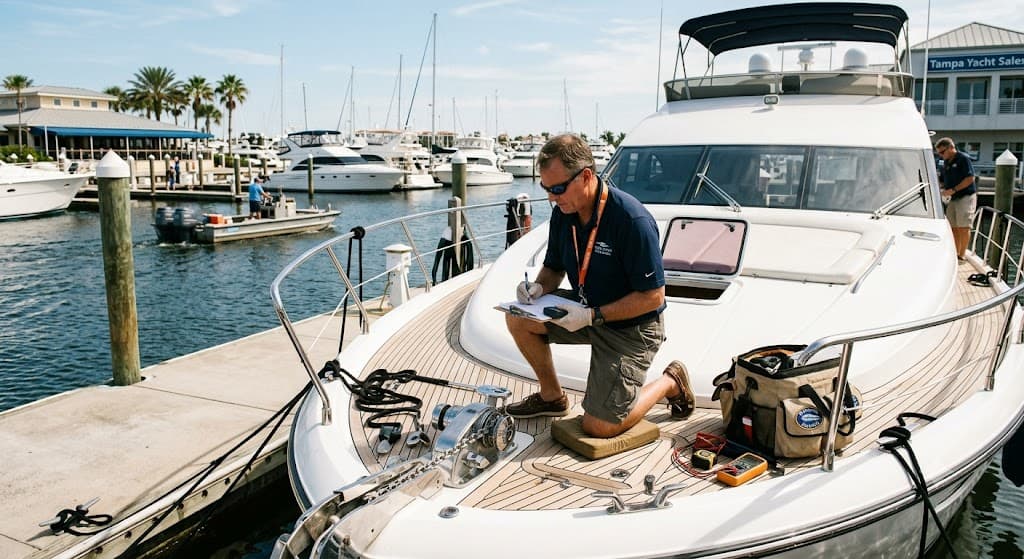
Survey day is the moment of truth in every boat sale. The buyer is excited, the surveyor is thorough, and everything your boat does—or doesn’t do—plays out in front of an audience. A seized seacock, a sluggish windlass, or a generator that won’t take a load can shave thousands off your price or kill the deal altogether. The good news? Nearly every survey-day surprise is preventable. That’s why we created our free [Survey & Sea Trial Checklist], a complete, system-by-system prep guide for boat owners.
Why Start a Week Early
The single most important tip: work through the checklist at least a week before your survey. That buffer gives you time to order parts, schedule a diver, or bring a mechanic aboard before the surveyor steps on deck. Discovering a brittle hose on survey day helps the buyer’s negotiation, not yours.
What the Checklist Covers
The guide breaks the entire boat into seven areas so you can tackle one system at a time:
Engine, Mechanical & Fuel — Run your engines to top speed, degrease the engine room, refresh old fuel and filters, and check every fluid. One insider tip from the guide: never change your oil the day before a survey. Surveyors get suspicious of brand-new oil—change it early and put some hours on it.
Electrical & Power — Make sure batteries are charged and secured in proper boxes, chargers and inverters are working, GFCI outlets are installed in wet areas, and the generator starts smoothly and takes a load. Don’t overlook broken bonding wires—they’re easy to fix, but can raise questions about electrolysis when left dangling.
Plumbing, Climate & Bilge — Surveyors always check seacocks, and insurers require them to work. Lubricate every valve, double-clamp every below-waterline fitting, flush the heads, test the A/C, and make sure bilge pumps and float switches do their job.
Hull, Steering & Ground Tackle — Have the bottom and running gear cleaned before the sea trial, exercise the windlass, replace tired zincs, check steering at every station, and physically verify your hull ID so there’s no confusion about the boat’s year.
Electronics, Lights & Safety — Every screen, light, and alarm should power up and work: GPS, radar, autopilot, navigation lights, and spotlights. Confirm that flares are in date and that fire extinguishers and life rafts carry current certifications—USCG compliance items the surveyor will check.
Sails & Rigging — For sailors: run the furler, hoist the main, test winches under load, and inspect standing rigging for rust, chafe, and proper tune.
Documentation & Compliance — Have your insurance, USCG documentation or state title, manuals, receipts, and logbook aboard—plus the waste, trash, and oil-discharge placards surveyors expect to see.
A Smooth Survey Is a Stronger Sale
A boat that performs flawlessly on survey day tells the buyer one thing: this vessel has been well cared for. That confidence translates directly into a cleaner negotiation, a faster closing, and a better price.
Ready to prep? Read the full checklist here: [Survey & Sea Trial Checklist →] (https://www.tampayachtsales.com/survey-sea-trial-checklist)
Missing a placard, a certificate, or simply not sure where to start? Your Tampa Yacht Sales broker is happy to help—reach out before the big day.
Tampa Yacht Sales, INC — over 24 years of yacht brokerage excellence in Tampa Bay.
360 Central Ave, St. Petersburg, FL | 833.892.0557 | sales@tampayachtsales.com